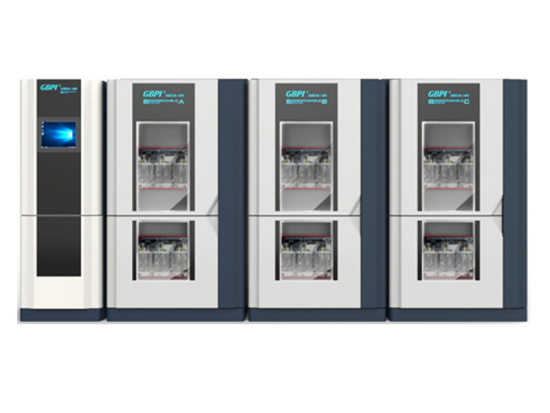
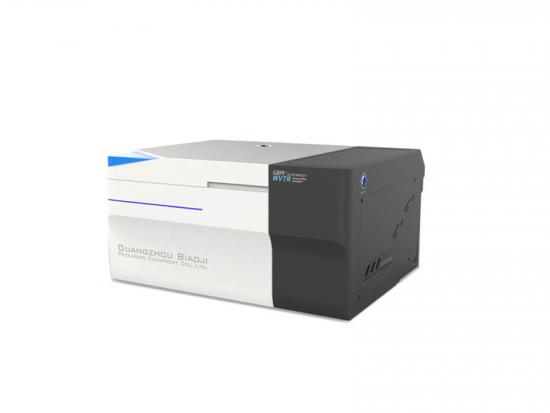
packaging testing equipment Water Vapor Permeation Tester
productos
Hogar /

servicio de prueba de envases flexibles

/

elementos de prueba

/

prueba de tasa de transmisión de oxígeno

/Prueba de velocidad de transmisión de oxígeno de película barrera EVOH

Prueba de velocidad de transmisión de oxígeno de película barrera EVOH

La tasa de transmisión de oxígeno (OTR) es la medida de la cantidad de gas oxígeno que pasa a través de una sustancia durante un período determinado. Se lleva a cabo principalmente en materiales no porosos, donde el modo de transporte es la difusión, pero hay un número creciente de aplicaciones en las que la velocidad de transmisión también depende del flujo a través de aberturas de algún tipo.

  • Marca:

    GBPI
  • Artículo No.:

    Oxygen Transmission
  • Origen del producto:

    Guangzhou China
  • Puerto de embarque:

    Huangpu Guangzhou
consulta ahora
Categorías
Detalle del producto

¿Qué afecta el OTR de las películas?


Se logra una buena barrera al oxígeno combinando capas funcionales para crear una película con la barrera requerida, así como aquellas otras propiedades necesarias para producir un paquete útil. Por ejemplo, EVOH tiene propiedades OTR excepcionales, pero necesita una barrera contra la humedad y propiedades mecánicas proporcionadas por capas coextruidas o laminadas a su alrededor.


OTR se ve más afectado por los siguientes factores.


1. Espesor de la capa de barrera: Generalmente, cuanto más gruesa sea la capa que proporciona la barrera de oxígeno, mejor será la barrera. Pero existen limitaciones de proceso y costos que restringen los espesores que se pueden producir o utilizar con éxito de manera realista.


2. Proporción de copolímero, contenido de plastificante y proceso de polimerización: no todos los PVdC (o EVOH o PVOH) son iguales. Las propiedades se ven comprometidas durante el desarrollo de polímeros y productos, de modo que se optimiza el rendimiento total en las aplicaciones de destino. Puede haber diferencias sustanciales en los valores de OTR según las selecciones realizadas. Por ejemplo, tanto ASB-X como AXT están recubiertos de PVdC y son sellables, pero sus OTR son 4,5 cc/100 in2/24 h y 0,40 cc/1 00 in2/24 h, respectivamente. ASB-X tiene el OTR más pobre, pero una gama de sellos más amplia que AXT.


3. Compatibilidad de la superficie de la película base: Las características físicas y químicas de la superficie de la película base tienen un efecto importante en la OTR después de la metalización y, en menor grado, después del recubrimiento. Esto se evidencia en la barrera excepcional del Met PET, así como en la diferencia en OTR entre varios productos de OPP metalizados (consulte la Tabla 10).


Entonces, ¿cómo medir la tasa de transmisión de oxígeno de las películas?


Los instrumentos de prueba de embalaje de GBPI General le ayudan a encontrar la respuesta.

GBPI R&D es el último equipo de prueba de embalaje para la industria del embalaje. Desarrollamos los últimos probadores de permeabilidad al oxígeno Y110 e Y310 para pruebas de tasa de transmisión de oxígeno de material de embalaje.


Cumplir con los métodos de prueba estándar de ASTM incluyen:


Método de prueba estándar D3985 para la tasa de transmisión de gas oxígeno a través de películas y láminas de plástico utilizando un sensor coulométrico

Método de prueba estándar F1307 para la tasa de transmisión de oxígeno a través de paquetes secos utilizando un sensor coulométrico

Método de prueba estándar F1927 para la determinación de la tasa de transmisión de gas oxígeno, la permeabilidad y la permeabilidad a humedad relativa controlada a través de materiales de barrera utilizando un detector coulométrico

Método de prueba estándar F2622 para la tasa de transmisión de gas oxígeno a través de películas y láminas de plástico utilizando varios sensores

enviar un mensaje

déjanos un mensaje, te responderemos lo antes posible.

Productos relacionados
Pruebas de propiedades ópticas Prueba de propiedades ópticas de fuente de luz estándar P60
Fuente de luz estándar P60 Se utiliza para la observación del color, el contraste del color y la combinación de colores en una amplia gama de industrias de impresión, pinturas, tintas de impresión, plásticos, teñido, etc.
Probador de espesor Probador de espesor digital de película plástica
El probador de espesor Didital se utiliza para realizar mediciones de espesor o mediciones comparativas de películas plásticas, láminas delgadas, papel, etc.
Analizador de permeabilidad al vapor de agua por método gravimétrico Probador WVTR de método gravimétrico inteligente W301 2.0
Solicitud El analizador de permeabilidad al vapor de agua W 301 2.0 está diseñado para probar la tasa de transmisión de vapor de agua (WVTR) de películas o materiales laminados con el principio del método gravimétrico.
Probador de impacto de dardo que cae Paquete flexible GBD-L de la hoja de la película plástica de la prueba del probador del impacto del dardo que cae
El probador de impacto de dardo de caída GBD-L prueba la resistencia al impacto de varias películas, láminas metálicas, etc., ampliamente utilizado en industrias de embalaje, películas plásticas, laboratorios, institutos de investigación, agencias de inspección, etc.
Cortador de muestras de prueba de tracción
    Cortador de muestras para pruebas de tracción - LC-1
El cortador de muestras para pruebas de tracción LC-1 corta muestras de películas plásticas, papel, etc., como preparación para otras pruebas, como tracción, pelado, desgarro y termosellado, etc. Tiene una estructura compacta y es fácil de usar. Los bordes de la muestra recortada son uniformes y lisos.
Migration Test Cell-MC-B
MC‑B Migration Test Cell: Professional Pre‑Treatment Solution for Food‑Contact Material Migration Test GBPI MC‑B Migration Test Cell for Food‑Contact Material Migration Pre‑Treatment Address: No.3 Linjiang Road, Xiagang Subdistrict, Huangpu District, GuangzhouTel: +86 15820231129 | Official Website: www.gbpitester.com Product Introduction MC‑B Migration Test Cell is applied to the pre‑treatment of migration tests for food‑contact materials and products. It meets the requirements of GB 5009.156‑2016 and is suitable for all non‑volatile food simulants specified in GB 31604.1‑2015, EN1186‑1 and other relevant standards. It provides standardized test conditions to support safety assessment for food‑contact films, sheets and flat‑shape specimens, widely adopted by third‑party laboratories, food packaging manufacturers and research institutes. Executive Standards To ensure test repeatability and global recognition, MC‑B Migration Test Cell conforms to both Chinese national standards and European normative requirements: GB 5009.156‑2016, GB 31604.1‑2015, GB/T 23296.1‑2009, EN 1186‑1:2002, EN 13130‑1:2004. It satisfies migration pre‑treatment requirements for domestic inspection and EU export certification. Core Technical Parameters Contact Type Single‑sided contact Contact Area 196 cm² Diameter Φ158 mm Volume 390 mL Operating Temperature 5℃ ~ 180℃ Overall Dimensions 235 mm(L) × 225 mm(B) × 135 mm(H) Net Weight 8.2 kg Product Features • Manufactured strictly in accordance with Figure B.4 of Appendix B in GB 5009.156‑2016 for Migration Test Cell B and Figure C.3 Migration Test Cell A from Appendix C of EN1186‑1, ensuring high consistency of migration test results among different laboratories. • Adopts high‑grade stainless steel material, no trace substance precipitation occurs during testing, avoiding interference to migration analysis data. • Thickened lead‑screw central compression sealing structure delivers reliable single‑sided sealing and prevents liquid permeation. • Large single‑sided contact area and volume improve the efficiency of sample pre‑treatment. • Special sealing construction isolates non‑test areas of samples from food simulants, securing valid and accurate contact test area. Application Fields It applies to migration test pre‑treatment for food‑contact materials and products in forms of films, plates and sample sheets. It supports migration pre‑treatment with non‑volatile food simulants including water, acid‑alkali solutions and vegetable oil for food‑contact articles, satisfying routine inspection, new‑material R&D and export compliance verification for food packaging industry. Conclusion MC‑B Migration Test Cell is a standard‑compliant auxiliary device for food‑contact material safety testing. Built according to Chinese national standard and European standard drawings, it features large contact area and high pre‑treatment efficiency. It delivers repeatable migration pre‑treatment results for lab QC, third‑party testing institutes and packaging manufacturers. It is essential hardware for food‑contact material compliance assessment both for domestic market and European export business. Get Quotation for This Unit GBPI Packaging Test Equipment ManufacturerAddress: No.3 Linjiang Road, Xiagang Subdistrict, Huangpu District, Guangzhou, Guangdong, ChinaTel: +86 15820231129 | Official Website: www.gbpitester.com
Probador inteligente de degradación de compost
    Respirómetro de biodegradación de abono plástico
El probador de degradación de compost GBDA-120 está diseñado en total conformidad con estándares como ISO14855-1 y ASTM D5338. La masa de dióxido de carbono liberada durante la biodegradación se puede detectar automáticamente y se puede determinar el porcentaje de biodegradación de materiales degradables.
Haze Meter YH1200
  GBPI Optical Testing Equipment Haze Meter YH1200 General‑purpose Model Looking for technical specs, quotation or application guidance? Get complimentary support from our professional testing instrument specialists. Click for Free Consultation Introduction The YH1200 Haze Meter (general‑purpose model) easily performs total luminous transmittance and haze measurements in accordance with both the ASTM D1003 (non‑compensated) and ISO 13468 (compensated) standards. Its open sample compartment supports both vertical and horizontal testing, accommodating a wider variety of samples. Equipped with a PD array detector that conforms to the CIE V(λ) 2‑degree standard observer response, the YH1200 delivers highly accurate and repeatable transmittance and haze data through its compensated measurement method. Application YH1200 haze meter is widely used in glass processing, plastic processing, film, display screen processing, packaging industry, liquid medicine analysis, etc. Technical Advantages Dual Standards: ISO & ASTMDesigned to meet the testing requirements of various users, the instrument complies with the following standards: ASTM D1003/1044, ISO 13468, ISO 14782, GB/T 2410, JJF 1303‑2011, CIE 15.2, JIS K7105, JIS K7361, and JIS K 7136. Easy Operation for Faster, More Accurate MeasurementsThe YH1200 Haze Meter features a large touchscreen interface for simple and convenient operation. Equipped with a PD array detector that adheres to the CIE V(λ) 2‑degree visual response, it ensures high‑precision, repeatable measurements of transmittance and haze. It also includes a USB data output port for seamless integration with laboratory information systems. Dynamic MeasurementIntegrated with independent light source detectors and temperature sensors, the device continuously monitors the light source and environmental conditions, ensuring the reliability of test data. Compensation Port for Enhanced Measurement AccuracySupports both the non‑compensated method (ASTM D1003) and the compensated method (ISO 13468) for total luminous transmittance and haze testing, delivering highly accurate results. Versatile Measurement and Broad Sample CompatibilityThe open measurement area allows for both vertical and horizontal testing, accommodating a wide range of sample types. Quality Management SoftwareIncludes powerful software for the analysis of haze and transmittance measurements, ideal for quality control across various industries. The software enables digital data management on a PC, allowing users to compare haze and transmittance values, generate test reports, and customize data management workflows to suit specific operational needs. About GBPI GBPI (Guangzhou Biaoji Packaging Equipment Co., Ltd.) was founded in 2002 in Guangzhou Economic and Technological Development Zone. It is a comprehensive high‑tech enterprise integrating R&D, manufacturing and sales of packaging & optical testing instruments. We deliver complete testing solutions for packaging, food, pharmaceutical, new‑material and laboratory industries. GBPI owns CNAS‑authorized testing laboratory and reference‑material development center, supplying instrument hardware, third‑party sample testing and calibration services for global clients. Interested in YH1200 Haze Meter for your laboratory? Reach out to GBPI for datasheet, quotation and professional technical support. Click for Free Consultation
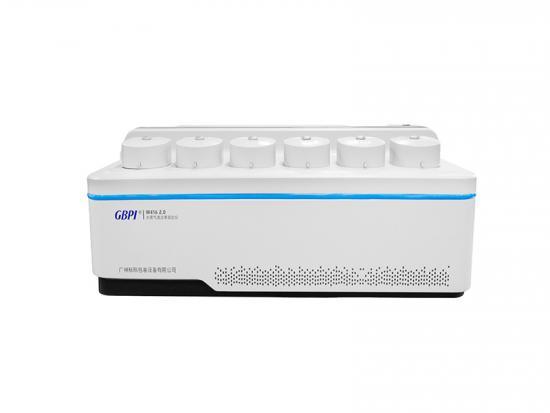
profesional Probador de tasa de transmisión de vapor de agua W416 2.0 proveedor Probador de tasa de transmisión de vapor de agua W416 2.0
Perfil del producto • The W416 2.0 Infrared Method Water Vapor Transmission Rate Tester is a high-end precision testing instrument for packaging materials, newly developed and upgraded by Guangzhou Standard International R&D Team in full compliance with the requirements of **GB/T 26253** and **ASTM F1249** standards as well as market demands. • Based on the testing principle of infrared moisture analysis sensors, it provides wide-range, high-efficiency water vapor transmission rate (WVTR) testing for high, medium and low barrier materials. • It is suitable for testing the water vapor transmission performance of films, sheets, papers, packages and other related materials in industries such as food, pharmaceuticals, medical devices, daily chemicals, photovoltaic electronics, etc. • It is an ideal offline or online configuration instrument for manufacturers in the packaging industry to test the barrier performance of packaging materials. Testing Principle The W416 2.0 Water Vapor Transmission Rate Tester adopts the infrared method principle: 1. Fix the pre-treated sample in the middle of the test chamber, dividing the chamber into a high-humidity chamber and a low-humidity chamber. 2. Compressed air flows through the high-humidity chamber, while dry nitrogen (carrier gas) flows through the low-humidity chamber at a constant flow rate. 3. Due to the humidity gradient, water vapor penetrates from the high-humidity chamber to the low-humidity chamber. 4. The water vapor passing through the sample is carried to the infrared sensor by the flowing dry nitrogen. 5. Parameters such as the sample’s water vapor transmission rate are derived from the electrical signal output by the sensor. Working Principle Diagram of Infrared Method Standards • ISO 15106-2 • ISO 21760-1 • ASTM F1249 • GB/T 26253 • JIS K7129-2 • Chinese Pharmacopoeia 2025 Edition <4010 Determination of Water Vapor Transmission Rate of Pharmaceutical Packaging Materials> • YBB 00092003 Technical Parameters Item Technical Parameter Test Range 0.002 ~ 100 g/(m²·24h) Repeatability The greater value between 0.005 or 2% Resolution 0.0001 g/(m²·24h) Temperature Control Range 15 ~ 45℃ Temperature Control Precision ±0.1℃ Humidity Control Range (5 ~ 90)%RH, 100%RH Humidity Control Precision ±1%RH Test Area 50.24 cm² Sample Size Φ100 mm Sample Thickness ≤ 3 mm Sample Quantity 6 pieces Carrier Gas 99.999% Nitrogen (provided by the user) Carrier Gas Pressure ≥ 0.1 MPa Carrier Gas Flow Rate 5 ~ 100 mL/min Pneumatic Pressure ≥ 0.3 MPa Dimension 1140mm × 600mm × 440mm Weight 55 kg Power 750 W Power Supply AC 220 V, 50 Hz Product Features • Patented Sensor Technology for Efficient and Accurate Testing - The high-precision infrared moisture sensor is jointly developed with top foreign technical teams, featuring ultra-high stability, ultra-low failure rate, high sensitivity, and a resolution of up to 0.0001 g/(m²·24h). - Equipped with a brand-new pneumatic air circuit control system, the automatic fixture locks the sample with one key, ensuring convenient operation and excellent sealing performance. • Full-Automatic Precision Temperature and Humidity Control - Temperature Control: The semiconductor cooling chip realizes bidirectional automatic temperature control with a precision of ±0.1℃. - Humidity Control: Adopts dual-airflow (dry and humid air) humidity control method for stable and high-precision humidity regulation, with an accuracy of ±1%RH. • Wide-Range Testing with High Applicability - The instrument is equipped with 6 independent test chambers, meeting high-throughput testing requirements with high efficiency. - Boasts a wide test range with a lower limit of 0.002 g/(m²·24h), suitable for testing various high, medium and low barrier materials. With customized accessories, it can also test the water vapor transmission rate of containers such as bottles, bags and bowls. • User-Friendly Operation with Real-Time Visual Curves - Supports fully automatic operation, including one-key testing, automatic judgment and automatic shutdown. - Real-time displays five sets of curves: transmission rate vs. time, temperature vs. time, humidity vs. time, flow rate vs. time and voltage vs. time, with preview and hide functions available for the curves. • Intelligent Operating System with Global Certification - Self-developed intelligent operating system with modular graphics, allowing flexible setting of test procedures and parameters for intuitive and convenient operation. - Designed in accordance with the *Annex to GMP <Computerized Systems>*, it has an audit trail function and multi-level user permission settings, meeting the data traceability requirements of the pharmaceutical industry. - Supports customized test report settings, multiple data output formats, electronic signatures and online submission of audit reports. • Professional Calibration Service for Accurate and Reliable Data - Our company holds the National Standard Substance Grading Certificate for water vapor transmission rate, approved and issued by the General Administration of Quality Supervision, Inspection and Quarantine of the People's Republic of China, with standard substance numbers (GBW(E)130543 / GBW(E)130544). - The instrument is calibrated and verified using self-developed national standard substances to ensure the accuracy, universality and authority of test data. • Intelligent Laboratory IoT Platform - The instrument can be connected to the IoT platform to realize network digital management. - Remote authorized login to the IoT platform enables functions such as managing test data and remote fault diagnosis. - Customers can download required instrument data, documents and operation videos on the platform independently.
Vertical Counter‑Pressure Retort LS‑35L/50L/75L/100L | Dual‑Mode Sterilization for Food Packaging Aseptic Testing
Vertical Counter‑Pressure Retort LS‑35L/50L/75L/100L | Dual‑Mode Sterilization for Food Packaging Aseptic Testing LS‑series Vertical Counter‑Pressure Retort for Food Packaging Sterilization & Laboratory Aseptic Validation Product Introduction Reliable dual‑mode counter‑pressure sterilizer tailored for food packaging quality control & lab aseptic evaluation. The vertical counter‑pressure retort is a medium‑small‑size mechanically program‑controlled counter‑pressure sterilization equipment. The sterilizer adopts electric heating mode. Water is directly injected into the sterilizing chamber and heated to generate high‑pressure steam required for sterilization to disinfect articles. After sterilization is completed, external compressed air and water pressure are applied for rapid cooling within 3 minutes, cooling internal articles down to 30‑40℃. Equipped with program control, it supports two operation modes: boiling disinfection and pressure sterilization with rapid cooling. Boiling temperature can be set ≤100℃. The rapid‑cooling pressure sterilization temperature is pre‑selectable within 101℃‑135℃. It is integrated with heater overload protection and buzzer alarm upon sterilization completion. Featuring simple operation and high safety reliability. This unit is suitable for disinfection and sterilization of food packaging, utensils and instruments. It is an ideal device especially for aseptic tests in food research institutions. Working Principle Dual‑sterilization logic enables boiling disinfection & high‑pressure counter‑pressure sterilization, simulating real‑world thermal processing conditions for flexible packaging samples. This equipment is designed with two disinfection & sterilization principles to deliver dual‑function performance for customers. The heater directly heats water to produce pressurized steam. The pressurized steam acts on microorganisms on samples and destroys their structures to realize sterilization. When rapid‑cooling sterilization program starts, 6 liters of tap water is first injected into the chamber. After around 25‑minute heating process, it enters sterilization holding stage with sterilization duration of 35‑40 minutes. When sterilization finishes, 0.24 MPa compressed air and tap‑water pressure are manually fed into the chamber, then half‑open the drain valve to discharge water and implement counter‑pressure cooling for flexible packages and other specimens. Rapid cooling lasts for 3 minutes. Manually cut‑off compressed air and tap‑water supply, and internal articles can be cooled down to 30‑40℃. Core Advantages Dual‑mode operation: boiling disinfection & counter‑pressure pressure sterilization Ultra‑fast 3‑minute counter‑pressure cooling to avoid flexible pouch deformation Heater overload protection & buzzer alarm when sterilization cycle completes Multiple chamber volume options:35L‑50L‑75L‑100L for different test throughput Mechanical program control, easy operation for laboratory staff Technical Parameters Item Specifications Max Working Pressure 0.22 MPa (30 Psi) Max Working Temperature 135℃ Sterilization Temperature Selection 101‑135℃ Boiling Temperature Selection ≤100℃ Timer Range 1‑60 min Effective Chamber Volume 35L, 50L, 75L, 100L Power / Power Supply 2.5 KW / AC220V, 50Hz; 3 KW / AC220V, 50Hz; 4.5 KW / AC220V, 50Hz Overall Dimension 570×550×970 mm(35L);590×590×1110 mm(50L);650×630×1150 mm(75L);680×650×1220 mm(100L) Gross / Net Weight 56/42 kg(35L); 68/50 kg(50L); 90/70 kg(75L); 105/85 kg(100L) Application Scenarios Widely adopted in food R&D laboratories, packaging manufacturers and quality inspection institutes for sterilization and thermal‑resistance assessment of flexible food packaging materials. Disinfection & sterilization for food flexible packaging, containers and lab utensils Aseptic test and thermal resistance evaluation for food packaging samples Sterilization for laboratory instruments and small‑batch food test specimens Get Custom Solution & Quotation GBPI Packaging Test EquipmentOfficial Website: www.gbpitester.com
tasa de transmisión de vapor de agua WVTR MVTR Método de sensor electrolítico del analizador de permeabilidad al vapor de agua para prueba de materiales de láminas de barrera flexible - W201
El analizador de permeabilidad al vapor de agua se utiliza para probar la tasa de transmisión de vapor de agua (WVTR) de películas u hojas de materiales para embalajes flexibles.
Probador de eficiencia de filtración de partículas de mascarilla facial Probador de eficiencia de filtración de partículas de mascarilla facial
GBPI ofrece máquinas de prueba de mascarillas para mascarillas quirúrgicas, mascarillas N95 y tela fundida. Probador BFE, Probador PFE, Probador N95, Probador de tela fundida
  • Facebook
  • Linkedin
  • Youtube
  • Twitter

Derechos de autor @ 2026 Guangzhou Biaoji Packaging Equipment Co.,Ltd. Reservados todos los derechos.

Chatea ahora

consulta ahora

Hogar

productos

Noticias

contacto